Postmaster
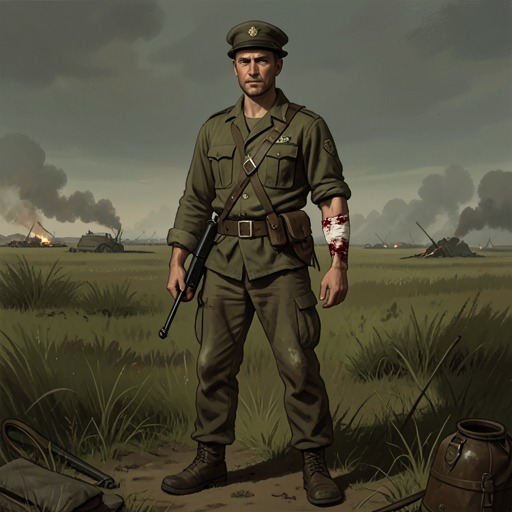
Dead SoulsThe Postmaster is a senior official in the provincial town whose composure sets him apart during the officials’ collective panic over Chichikov. His decisive contribution is also his most revealing mistake: he announces that he has identified Chichikov as Captain Kopeikin, then tells a story of a wounded veteran seeking support from the government. The account briefly gives the gathering a narrative to seize upon, but the mismatch between Kopeikin’s lost limbs and Chichikov’s appearance soon undoes the theory.## Position in the Provincial Community The Postmaster is among the municipal officials Chichikov visits after arriving in town. Chichikov calls on him as part of an exhaustive round of introductions that also includes the Governor, the Vice-Governor, the Public Prosecutor, the President of the Local Council, the Chief of Police, and other officeholders. He flatters the Chief of Police about the local gendarmery and carefully cultivates the officials’ favor, placing the Postmaster within the network of civic authority that Chichikov seeks to enter.
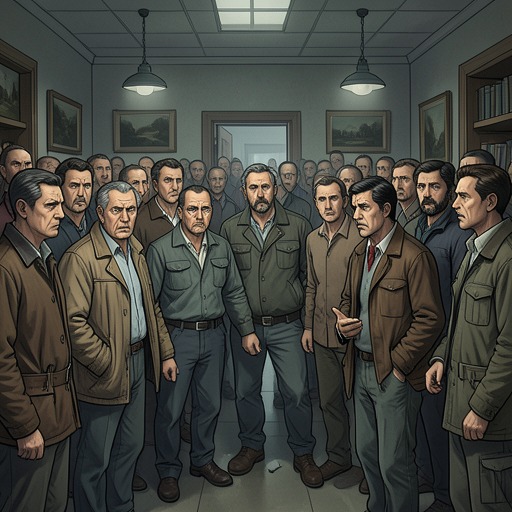
At the officials’ later gathering, the Postmaster is one of a small number who have not lost their presence of mind amid rumors, official anxiety, and the prospect of a new Governor-General. The narrator describes him as even-tempered and recalls his confidence that he and his colleagues have seen several Governor-Generals come and go while he has remained in the same position for thirty years. His stability is not the same as sound judgment: the assembly as a whole is marked by indecision, contradiction, and a conspicuous lack of common sense, and the Postmaster’s composure gives way to an extravagant theory.## The Captain Kopeikin Theory After the officials debate Chichikov’s identity without reaching a conclusion, the Postmaster suddenly declares that he knows who Chichikov is. He identifies him as Captain Kopeikin, a veteran of the 1812 campaign who lost an arm and a leg, could not earn his living, and went to Saint Petersburg to seek assistance from a Temporary Commission because the state made no provision for wounded soldiers. The story shifts attention from the officials’ immediate uncertainty to the veteran’s predicament: Kopeikin has served his country, yet must petition for help while living on meagre means.
The Postmaster tells the tale as an embedded story within the officials’ discussion. He supplies concrete circumstances of Kopeikin’s appeal, including his arrival in the capital with little money, his inexpensive lodging, and his journey to the Commission president’s imposing residence. The contrast between the capital’s grandeur and the veteran’s poverty gives the story force beyond its role as a clue in the investigation. Yet the Postmaster treats resemblance of circumstance as proof of identity, and his performance as storyteller carries the gathering farther into speculation rather than closer to reliable knowledge.## Mistake and Reversal The theory collapses when the Head of the Police Department points out the obvious difference: Kopeikin lost an arm and a leg, whereas Chichikov has not. The Postmaster immediately recognizes the flaw, strikes his forehead, and publicly calls himself a fool. He later tries to excuse the error by invoking the supposed sophistication of English mechanical science, imagining that a wooden leg might allow its wearer to disappear at the touch of a spring. The fanciful explanation does not repair the mistake; it extends the scene’s comedy by showing how quickly one failed conjecture can generate another.
The failed identification does not end the officials’ search for explanations. Other theories follow, including the notion that Chichikov is Napoleon in disguise, before the officials decide to question Nozdrev, who had first mentioned the dead souls and was thought to know Chichikov well. The Postmaster therefore acts as a catalyst in the assembly’s movement from anxious uncertainty to increasingly absurd invention, not as a source of dependable information.## Narrative Role and Significance The Postmaster is defined in this episode by the tension between composure and credulity. His long tenure and equable temperament make him seem a seasoned observer of official life, but under pressure he offers a confident conclusion unsupported by the most basic physical fact. The reversal is immediate and public, turning his self-assurance into embarrassment while exposing the gathering’s appetite for a story that will resolve its fears.
His tale of Captain Kopeikin also brings a serious social failure into the same comic sequence as the officials’ confusion. A wounded veteran, unable to work and without state support, must seek aid through a commission; the Postmaster’s mistaken identification makes this account serve the wrong investigative purpose, but does not erase the injustice at its center. In this way, his episode links the novel’s satire of bureaucratic panic to a concrete contrast between official institutions and the people who depend on them. Later, as evidence about Chichikov’s earlier customs service and dead-soul purchases emerges, the Postmaster’s theory remains one conspicuous false lead in a wider inquiry that gradually uncovers information Chichikov had believed concealed.